Opening soon. Get your price and request a booking now, and a person will email you within one business day about a time that fits your days. You pay nothing until you pick a time.

Guide · Ovens
How to clean an oven, step by step
To clean an oven, take out the racks, spread a paste of bicarb soda and water over the cool, empty cavity, leave it for about 12 hours, then scrape gently, wipe and rinse. Allow about 20 minutes to set up and usually 2 to 4 hours of scrubbing the next day. Do the racks in a soak, take the door glass apart if your model allows, and never scrape catalytic liners or the enamel in a pyrolytic oven.
Updated 31 October 2026 · Ember & Leaf, oven and BBQ cleaning from Tweed Heads to Ballina
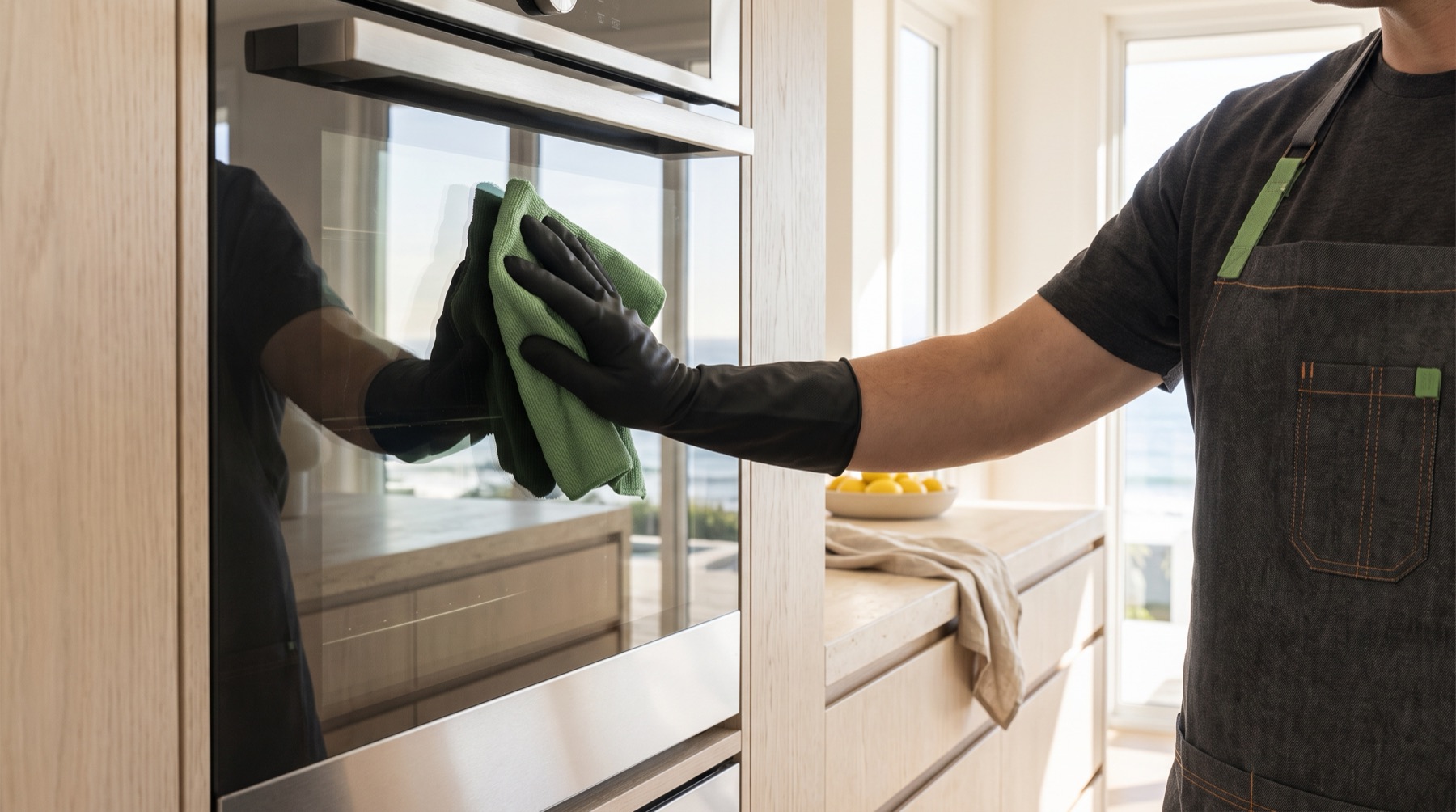
Before you start: safety and setup
A few minutes of setup makes the job safer and easier. Check your oven manual first, because it overrides any general advice here.
01
Switch the oven off and let it cool completely. Turn it off at the wall or the isolator, or at the switchboard if you're unsure. Cleaning a warm oven burns skin and bakes product onto the surface.
02
Take everything out. Racks, trays, shelf supports (if they lift out), foil and the pizza stone all come out.
03
Lay down old towels or newspaper across the floor in front of the oven. Scrapings are greasy.
04
Put on gloves and open a window. Rubber gloves suit the bicarb method. Add eye protection and good ventilation for anything stronger.
05
Photograph the door and glass before you take anything apart. It makes refitting much easier.
If you smell gas, turn the gas off at the bottle or meter, ventilate and call a licensed gas fitter. If you find damaged wiring, a cracked element or scorch marks around a socket, stop and call a licensed electrician. Gas and electrical repairs are licensed work in NSW, not a DIY job.
Which method suits your oven?
Most home ovens suit one of the first two methods below. Which is best usually depends on the oven type and how much build-up you have.
Method
Time
Best for
Watch out for
Bicarb paste overnight
About 20 minutes, 12 hours' wait, then 2 to 4 hours
Regular ovens with light to medium build-up
Needs patience and a lot of wiping to remove all residue
Caustic oven cleaner
About 30 minutes to apply, then the label's wait time, then 1 to 2 hours
Thick, baked-on grease on plain enamel
Strong product: gloves, eye protection and ventilation are a must, and it can damage some surfaces
Pyrolytic cycle
Usually 2 to 4 hours including cooling
Pyrolytic ovens with light to medium build-up
Doesn't clean racks, door glass or the door seal area
Steam or "aqua" clean
Usually 20 to 40 minutes
Light, fresh spills
Won't shift baked-on grease
If your oven has rough, porous panels on the sides or back, read the section on catalytic liners before using either of the first two methods.
Method 1: bicarb paste overnight
This is the usual home method. It uses ordinary ingredients and a lot of waiting.
01
Mix the paste. Combine about half a cup of bicarb soda with a few tablespoons of water until it spreads like thick custard.
02
Spread it on the cavity. Use gloved hands or a brush on the walls, roof, floor and back. Work it into the greasy patches. Keep it off the heating elements, the fan vents and any gas burner ports at the base of the oven.
03
Leave it for about 12 hours. Overnight is easiest. The paste usually turns brownish as it loosens the grease.
04
Scrape off the worst. Use a plastic or wooden spatula. Avoid metal blades inside the cavity, which can scratch enamel.
05
Wipe it out with a damp cloth. Rinse the cloth often. Expect to do this many times.
06
Spray white vinegar over any white residue and wipe again. It usually fizzes and helps lift the last of the bicarb. Don't mix vinegar with a commercial oven cleaner.
07
Do a final wipe with clean water. Any bicarb left behind can leave a white film and smoke the first time you heat the oven.
08
Leave the door open to dry, then refit the racks.
If the paste has dried to a crust, mist it lightly with water before scraping. Burnt-on carbon may need a second round.
Method 2: a caustic oven cleaner, used safely
Caustic oven cleaners are strong, so they need more care. We don't recommend any brand. Whichever you use, the label comes first.
01
Read the label and your oven manual. Some surfaces, including aluminium parts, catalytic liners and some pyrolytic enamels, can be damaged. If the label or manual says not to use it, don't.
02
Wear rubber gloves, eye protection and long sleeves. Open windows and run the rangehood or an exhaust fan. Keep children and pets out of the kitchen.
03
Use it on a cool oven unless the label says otherwise.
04
Apply it only where the label says, and keep it off the elements, the fan, the door seal and any rubber or plastic trim.
05
Leave it for the time on the label. Don't leave it longer, because that can mark the surface.
06
Wipe out with a damp cloth or sponge and rinse the cloth repeatedly. Several rinse-and-wipe passes are usually needed to remove every trace.
07
Never mix it with other cleaners, including vinegar or bleach.
08
Finish by wiping the cavity with clean water and leaving the door open to air.
If you get product on your skin or in your eyes, follow the first-aid directions on the label and call the Poisons Information Centre on 13 11 26 if you're unsure.
How to clean oven racks, trays and shelf supports
The racks are often the dirtiest parts, and the easiest to do while the paste works on the cavity.
01
Lay an old towel in the bath or laundry tub. It protects the surface and stops scratching.
02
Fill it with hot water and a good squirt of dishwashing liquid, and add a cup of bicarb soda if you like.
03
Soak the racks and trays for at least a few hours, or overnight.
04
Scrub with a non-scratch pad or a brush, then rinse and dry.
05
Check any chrome racks for flaking. Rust spots or flaking plating usually mean the rack needs replacing.
Don't soak racks that have a special coating unless your manual says it's fine. Telescopic runners can seize if they're soaked, so wipe those by hand.
How to clean oven door glass
The brown streaks between the panes are the most common complaint about a home-cleaned oven. Wiping the outside won't fix them.
01
Check your manual. Many modern ovens have an inner glass pane that comes apart, but not all do. If yours isn't designed to, don't force it.
02
Photograph each step as you go. The panes and spacers have to go back in the right order and way round.
03
Lay the door flat on a towel and release the clips or screws that hold the inner pane. Doors are heavy, so get a second pair of hands if needed.
04
Wash each pane on both sides with hot soapy water and a non-scratch cloth. Use a plastic scraper for baked-on spots.
05
Dry and refit in the exact order you took them out.
If the glass is cracked, chipped or the door doesn't sit square, stop. That's a job for a repairer, not a cleaner.
The fan cover and the fan
Many fan-forced ovens have a removable cover over the back fan. It gets coated in grease.
01
Make sure the oven is off at the power.
02
Check your manual for how the cover comes off. It's usually held by screws, clips or a bayonet-style fitting.
03
Soak the cover in hot soapy water, scrub and dry it.
04
Wipe the fan blades with a damp cloth. Don't let water run into the motor.
05
Refit the cover firmly. If a part is loose, bent or noisy, call a licensed electrician or the manufacturer's service agent.
What not to scrape: catalytic liners and pyrolytic enamel
Two oven surfaces are easily ruined by scraping and strong product.
Catalytic liners are the rough, porous panels on the sides, back or roof of some ovens. They absorb grease and are designed to break it down when the oven runs hot. Never scrape them, scrub them or use oven cleaner on them. Wipe them gently with a damp cloth only, and check your manual. If they're heavily stained, they usually need replacing rather than cleaning.
Pyrolytic enamel is the smooth, specially treated lining in self-cleaning ovens. Use the pyrolytic cycle as your manual describes. Take the racks out first unless your manual says otherwise, and wipe out loose crumbs and spills before running the cycle. Open the windows, because the cycle can create smoke and smell. Avoid metal scrapers, scourers and caustic cleaners on the enamel unless your manual says they're fine. You'll still need to clean the racks, the outside of the door, the door seal area and between the glass by hand.
If you can't tell which type you have, the manual or the manufacturer's website usually says.
How long cleaning an oven takes
Allow roughly the following for a typical home oven. These are general figures and vary with the oven and the build-up.
Setup: about 20 minutes to empty the oven and spread the paste.
Waiting: about 12 hours for a bicarb paste, or the label's time for a caustic cleaner.
Scrubbing and wiping: usually 2 to 4 hours the next day, including the racks, rinsing and drying.
Door glass: another 30 to 60 minutes if you take it apart.
Heavily baked-on carbon often needs a second round. If you're short on time, a pro does the same job in a few hours, without the overnight wait.
When to call a professional
Most people can manage a light clean at home. Call a pro if:
The build-up is thick, black and hard, and the first round hasn't shifted it.
The door glass doesn't come apart, or you don't want to risk taking it apart.
You're not sure what type of lining your oven has.
You're selling, handing back a rental or hosting guests, and the oven has to be done by a certain day.
Your back, knees or time don't suit scrubbing the inside of an oven.
You see damage, a gas smell or electrical faults. Those need a licensed gas fitter or electrician, not a cleaner.
What Ember & Leaf does for an oven
We clean ovens from Tweed Heads to Ballina for a fixed price: $229 for a 60cm oven (about 2 hours) and $259 for a 90cm oven (about 2.5 hours). A 60cm oven with a separate grill is $319, a 90cm with grill is $360, and a double or wall oven pair is $380. There's no call-out fee from Tweed Heads to Ballina, and a few nearby towns add $29 travel, waived on bookings of $389 or more.
Every clean includes the racks, trays, shelf supports, door glass (taken apart where your model allows), the fan cover where it's removable, the door, knobs and front panel. Catalytic liners are wiped only, never scraped, and pyrolytic enamel is treated gently. We rinse twice, run a heat test and send photos before and after. You don't need to be home.
Heavy build-up adds 20 per cent to that item (capped) and is shown on your quote before you book. We don't repair gas or electrical parts, and we'll tell you if something needs a licensed tradie. If you're selling, handing back a rental or have guests arriving, tell us your deadline when you ask for a price.
See oven cleaning, how it works and all prices. If you want a reminder before the next clean gets heavy, the Cleaning Club is free and takes 10 per cent off every clean.
Questions about cleaning an oven
What is the easiest way to clean an oven?
For most people it's a bicarb soda and water paste left overnight, then scraped and wiped out. If your oven is pyrolytic, the self-clean cycle usually does the cavity for you, but check your manual.
Can I use oven cleaner in a self-cleaning oven?
Usually not. Many manufacturers advise against caustic cleaners on pyrolytic enamel and catalytic liners, so check your manual before using any.
How do I clean the glass between the oven door panes?
If your model is designed to come apart, usually by releasing clips or screws, separate the panes, wash each side and refit them in order. Photograph each step, and check your manual first.
Can I clean the oven racks in the dishwasher?
Usually not. Most racks are too big, and the dishwasher rarely shifts baked-on grease. A soak in hot soapy water in the bath or laundry tub works better.
How much does it cost to have an oven professionally cleaned?
With us, $229 for a 60cm oven and $259 for a 90cm oven, with heavy build-up adding 20 per cent to that item (capped). The price is fixed and shown on your quote before you book.
Ready when you are
Get an exact price in about a minute. No obligation, no call-out fee.