Opening soon. Get your price and request a booking now, and a person will email you within one business day about a time that fits your days. You pay nothing until you pick a time.

Guide · BBQs
How to clean a BBQ
To clean a gas hooded BBQ, run a 10 minute burn-off, turn the gas off at the bottle and let it cool, then take out the plates and flame tamers to soak, clear the burner ports, scrape the hood and firebox, wash the fat tray, wipe the stainless with the grain, and rebuild and leak-check it. A proper clean usually takes 2 to 3 hours if you do it yourself. Do it about every 6 months near the coast and every 12 months inland, with a quick burn-off and an emptied fat tray after each cook.
Updated 20 November 2026 · Ember & Leaf, oven and BBQ cleaning from Tweed Heads to Ballina
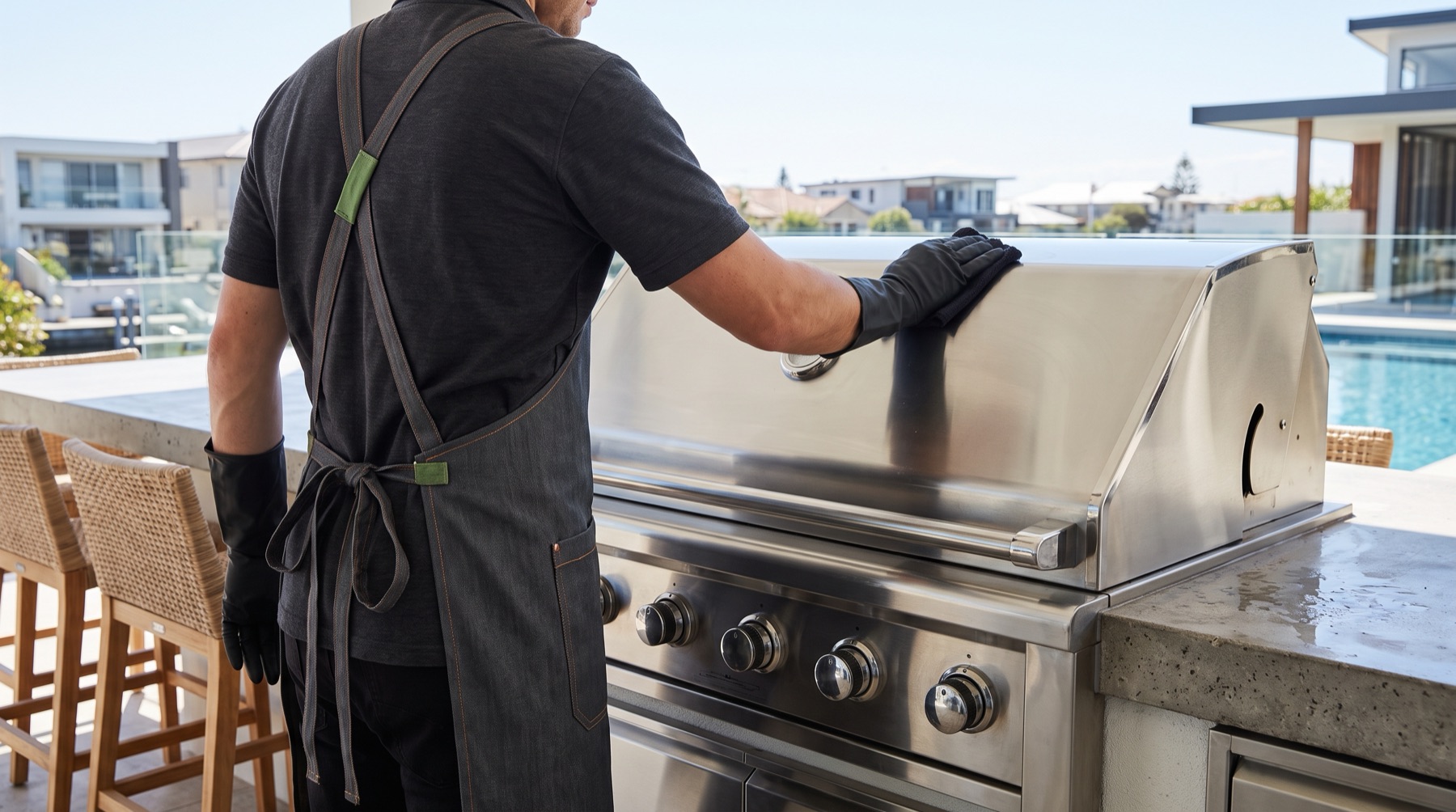
What you need before you start
Most of this is already in the shed or under the sink.
A plastic or wooden scraper (metal can gouge enamel and cast parts)
Dishwashing liquid and hot water
A bucket, or a laundry tub big enough for the plates
A soft brush, an old toothbrush and a non-scratch pad
A bottle brush or flexible brush for the burner tubes
Rags or paper towels, and a drop sheet
Gloves and eye protection
A spray bottle of soapy water for the leak check at the end
If you want a commercial BBQ cleaner, follow the label and your BBQ's manual. Wear gloves and eye protection, work outdoors in the open air, and keep it off the burners, igniters and any plastic or painted parts unless the label says it's fine.
Check your plates and grills for loose wire bristles if you've ever used a wire brush on them. Stray bristles can end up in food. If your brush is shedding, retire it.
How to clean a gas hooded BBQ, step by step
These steps suit a standard 4-burner hooded BBQ. Smaller and larger models follow the same order. Check your manual for anything specific to yours.
01
Burn it off (10 to 15 minutes). With the hood down, run every burner on high. Baked-on grease turns brittle and flaky, which makes the scraping easier. Turn the burners off.
02
Gas off, then cool. Turn the gas off at the bottle and let the BBQ cool until it's warm rather than hot. Warm grease scrapes off far more easily than cold grease. Put the drop sheet down.
03
Take everything out. Lift out the cooking plates or grills, the warming rack, the flame tamers (also called heat tamers, vaporiser bars or briquette trays) and the fat tray. Photograph the layout first so it goes back the same way.
04
Soak the plates and flame tamers. Put them in hot water with dishwashing liquid for 30 minutes, or overnight if they're heavily built up. Then scrape and scrub with the non-scratch pad. Rinse well and dry them.
05
Clear the burners. Lift the burners out if your model allows it. Brush along the ports (the little gas holes) with a soft brush, and don't poke anything into them that could make the holes bigger. Keep water away from the igniter and electrodes. Check the burner tubes for spider webs, which are the usual reason for a lazy yellow flame, and clear them with a bottle brush.
06
Scrape the hood and firebox. The black flakes inside the hood are usually carbon and grease, not paint. Scrape them down into the base, then wipe with hot soapy water. Scrape the firebox floor and the sides, and tip the debris into a bag.
07
Wash the fat tray and drip tray. Scrape out the fat (don't wash it down the drain or onto the ground), wash the tray in hot soapy water, dry it, and fit a fresh liner if your model uses one.
08
Wipe the stainless. Wash the outside with hot soapy water and a soft cloth, always along the grain, then dry it. A stainless protectant can help. Follow its label.
09
Rebuild. Burners in first, then flame tamers, plates, warming rack and tray. Make sure everything sits flat and square.
10
Reconnect and leak check. Reconnect the gas only if you disconnected it using the normal hand-tight bottle connection. Open the bottle valve slowly, brush soapy water over the connection and look for bubbles. See the gas safety section below for what to do if you see any.
11
Test fire and run it. Light each burner one at a time and look for an even blue flame. Run the BBQ for about 10 minutes with the hood down before you cook on it.
What to clean, and how often
Little and often is easier than a big clean once a year.
When
What to do
After every cook
Burn off for about 10 minutes, scrape the plates while warm, and empty the fat tray before it's half full
Every month or two
Wipe the hood and outside, and check the fat tray and drip tray
Every 6 months by the coast
Do the full strip-down clean in the steps above
Every 12 months further inland
Do the full strip-down clean in the steps above
If you cook for a crowd often, or it's a holiday home that gets heavy use, clean it more often than this.
Gas safety when you clean a BBQ
Gas work is licensed work in NSW. Cleaning is fine for you to do. Repairs aren't.
Always turn the gas off at the bottle before you take anything apart. If your BBQ is on a natural gas connection, turn it off at the isolation valve.
Don't disconnect, repair or adjust fixed gas fittings, hoses, regulators or valves unless that's something your manual says the owner can do, like screwing a bottle connector on and off by hand. Fixed gas work is for a licensed gas fitter.
Check the hose and regulator. Look for cracks, cuts, perishing, kinks and burn marks. If anything looks worn, get a licensed gas fitter or your gas bottle supplier to look at it before you use the BBQ again.
If you see bubbles at a connection, turn the gas off at the bottle, don't light the BBQ, and call a licensed gas fitter.
If you smell gas, turn the gas off at the bottle if it's safe to reach it, keep flames and sparks away, move away from the BBQ and call a licensed gas fitter or your gas supplier.
A yellow, lifting or uneven flame after a clean usually means blocked ports or a webbed tube. If cleaning those doesn't fix it, stop using the BBQ and have a licensed gas fitter look at it.
Keep water and cleaner away from igniters and any electrical parts, and work outdoors with good ventilation.
How to clean BBQ flame tamers, burners and plates
Each part needs something a little different.
Flame tamers. These catch the drips and burn them off, so they take most of the grease. Soak them, scrape off the carbon, and replace them if they've rusted through or are warping badly, because they won't shield the burners properly.
Burners. Don't soak the burners themselves unless your manual says to. Brush the ports and tubes and wipe them down. Cast and stainless burners are fairly easy. Thin, rusted burners can crack when you handle them, so be gentle.
Plates and grills. Cast iron plates and enamelled plates usually don't like metal scrapers or harsh scrubbing, so use plastic and a non-scratch pad. If you use cast iron, dry it well and wipe it with a thin coat of cooking oil afterwards to slow rust.
Hood hinges and knobs. Wipe them with a damp cloth and dry them. Salt and grease collect here first.
Cleaning a BBQ by the coast
Salt air makes a BBQ harder work. If you're within a few kilometres of the beach, salt settles on everything outside, and on a greasy BBQ it holds moisture against the steel. That's what causes the brown "tea staining" on stainless and rust on burners and hood hinges. From Tweed Heads to Ballina, most BBQs are in that zone.
What helps:
01
Clean it properly about every 6 months if you're near the beach.
02
Use a fitted cover, and put it on whenever the BBQ is cool.
03
Wipe the stainless dry after rain or a sea mist. Dry it with the grain.
04
Burn off for 10 minutes after you cook, and empty the fat tray before it's half full.
05
Look at the burners and hinges at each clean. Surface rust wipes off, but rust that has eaten through can't be cleaned away.
When it's worth getting someone in
Plenty of people clean their own BBQ, and the steps above will get a good result. A professional clean makes sense when:
the plates, tamers and hood have years of baked-on carbon
you don't have a spare 2 to 3 hours, or somewhere to soak big parts
you're selling, handing back a rental, or hosting guests
the BBQ is large, built in or has several burners
you'd rather not handle gas parts yourself
What Ember & Leaf does for a BBQ clean
We clean BBQs from Tweed Heads to Ballina at fixed prices. There's no call-out fee from Tweed Heads to Ballina, and a few nearby towns add $29 travel, waived on bookings of $389 or more.
BBQ
Price
About
Weber Q or other portable BBQ
$229
1.5 hours
Standard 4-burner hooded BBQ
$329
2 hours
BBQ up to 6 burners
$419
2.5 hours
Large, built-in or premium-brand BBQ
$479
3 hours
Full BBQ area or outdoor kitchen
from $590, priced from photos
about 4 hours
We turn the gas off at the bottle, then take out the plates, burners and flame tamers. They go in a heated soak and we scrape and degrease the hood, firebox and fat tray by hand. We clear the burner ports, check the tubes for webs, finish the stainless with the grain, then rebuild, check the connection we undo with soapy water, and test-fire every burner for 10 minutes. We also look at the hose and regulator and note anything that looks worn. We don't repair or adjust gas parts, and we'll tell you if you need a licensed gas fitter.
You get photos before and after, and you don't need to be home. Heavy build-up adds 20 per cent to that BBQ (capped) and is shown on your quote, never added on the day. See all prices, the BBQ cleaning page and how a booking works.
If you'd like a reminder, the free Cleaning Club sends one every 4, 6 or 12 months and takes 10 per cent off every clean. Six months suits a BBQ by the beach.
Questions about cleaning a BBQ
How often should I clean my BBQ?
Usually about every 6 months near the coast and every 12 months further inland, with a 10 minute burn-off and an emptied fat tray after each cook. Heavy use calls for more often.
How long does it take to clean a BBQ?
Usually 2 to 3 hours for a gas hooded BBQ if you do the full strip-down yourself, plus soaking time. We plan about 2 hours for a standard 4-burner hooded BBQ.
Should I burn off the BBQ before I clean it?
Yes, usually. Running it on high for 10 to 15 minutes with the hood down makes baked-on grease brittle and easier to scrape. Turn it off, turn the gas off at the bottle and let it cool until it's warm before you start.
How do I check my BBQ for a gas leak?
Brush soapy water over the connections and look for bubbles when the gas is on, and check your manual. If bubbles appear, turn the gas off, don't light the BBQ and call a licensed gas fitter.
Why is my BBQ flame yellow or uneven?
It's usually blocked burner ports or a spider web in the burner tube. Clear them carefully and test again. If the flame is still yellow, lifting or uneven, stop using the BBQ and call a licensed gas fitter.
How do I stop stainless steel going brown near the beach?
Wipe it clean and dry with the grain after rain or a sea mist, keep a fitted cover on when it's cool, and don't leave grease on it. Light brown tea staining usually wipes off if you catch it early.
Do I need to be home when you clean my BBQ?
No. If we can reach the BBQ through a side gate or with a key in a lockbox, you can be out, and we send photos when we're done.
Ready when you are
Get an exact price in about a minute. No obligation, no call-out fee.